Friday, March 4, 2011

"These hunger strikers are the martyrs of Greece" by Costas Douzinas


Greece: 98 Migrants Hospitalized During 39 Days of Hunger Strike
from brandon jourdan on Vimeo.


"These hunger strikers are the 
martyrs of Greece" 
by Costas Douzinas
Asylum seekers willing to die in the face of expulsion 
after shame and exploitation bear witness to a higher 
truth than life


As the world follows the north African revolutions with bated breath, a less public north African revolt and tragedy is taking place in Athens and Thessaloniki. Three hundred non-documented migrants, mostly from the Maghreb, have entered the 35th day of a hunger strike. Many have been taken to hospital in pre-comatose condition and are reaching a state of non-reversible organ failure and subsequent death.
These are people who have lived and worked in Greece for up to seven years. They picked olives and oranges, they looked after the old and the sick, they worked on building sites and orchards for a fraction of the minimum wage. After years of exploitation and humiliation, they are now told they are no longer wanted because of the economic crisis. They must go back voluntarily or be deported. Immigrants are the double victims of boom and bust in Greece. Now they are deemed to be surplus to requirements, to be disposed of like refuse.
What do the hunger strikers want? To make Greeks notice their meagre existence, to ask for basic labour protections and minimum living conditions. They ask at least for the recognition that they live and work in Greece but are treated worse than convicts on chain gangs. They are saying: "We the invisible, uncounted and undocumented are next to you, we worked for pennies and are part of who you are and what your government is doing to you." They are people punished not for what they have done (criminality or illegality) but for who they are. They arehomines sacri – legally nonexistent and therefore non-persons, meaning they can be treated in the most cruel way by the state, employers, landlords and the xenophobic minority.
The Greek government rejects their demands but claims that it fully respects human rights. Rights belong to humans, we are told, on account of their humanity and not of narrower memberships such as nation, state or group. This is a comforting thought. But the treatment of the sans papiers shows these claims to be ideological half-truths. In theory, human rights are given to all humans, in practice only to citizens. This is further confirmed by the treatment of asylum seekers. In January, the European court of human rights held that sending refugees back to Greece amounted to torture and inhuman and degrading treatment because of the appalling conditions of detention in immigration camps.
Greece virtually never gives political asylum to refugees. Other European states, including Britain, will no longer return asylum seekers to Greece. The Greek government has been condemned as a violator of the basic dignity of the wretched of the Earth. This is a sad conclusion for a country last condemned for systemic torture in the 60s during thedictatorship of the colonels. Many of the governing party members, including the prime minister, George Papandreou, found refuge during that dark period in foreign countries.
The hunger strikers are martyrs in a double sense. In Greek, martyr means both witness and sacrificial victim. They bear witness to higher truths than life, they state that life is worth living if it is worth dying for. In this sense, the strikers are exercising what philosophers from Rousseau to Derrida consider as the essence of freedom: acting against biological and social determinations in the name of a higher truth. Sacrifice meanssacrum facere, making the ordinary sacred. It bridges everyday life with what transcends it. The truth the hunger strikers defend at the personal level is dignity – what makes each person unique in our common humanity. Individual identity is built through the reciprocal recognition others give to self and self to others. I feel good to the extent that my intimate and remote friends consider me such. The absence of basic rights of work and life for the sans papiers leads to absence of all recognition making them less than human.
What is justice? We are surrounded by injustice but we don't often know wherein justice lies. In Greece, justice has miscarried in the IMF measures and the Athens ghettos, in the unemployed and the salary cuts for the low-paid and pensioners, in the treatment of the refugees and the wall built to keep the poor out and the Greeks in.
Protesting against the worst injustice and abuse, asking to be seen, heard and acknowledged in a minimal way, even if they need to go to death for that, is the greatest service the sans papiers offer to Greece. By resisting their dehumanisation, they become free and fight for the honour of Greeks against the iniquities of their government. They also remind the millions of sans papiers around Europe that after Tahrir Square they can also take their fate in their hands and resist the racist policies of European governments.
• Hara Kouki helped in the development of this article
This article originaly appeared in Guardian:
http://aaoproject.org/?page_id=299
For more info about the struggle and the hunger strike of 300 immigrants in Greece : http://hungerstrike300.espivblogs.net/category/%CE%B3%CE%BB%CF%8E%CF%83%CF%83%CE%B5%CF%82/english/
The youtube channel of the struggle: 

Thursday, February 17, 2011

END:CIV // a new great underground film by submediatv and pm press / a way out of this all-consuming madness and into a saner future.


END:CIV examines our culture’s addiction to systematic violence and environmental exploitation, and probes the resulting epidemic of poisoned landscapes and shell-shocked nations. Based in part on Endgame, the best-selling book by Derrick Jensen, END:CIV asks: “If your homeland was invaded by aliens who cut down the forests, poisoned the water and air, and contaminated the food supply, would you resist?”
The causes underlying the collapse of civilizations are usually traced to overuse of resources. As we write this, the world is reeling from economic chaos, peak oil, climate change, environmental degradation, and political turmoil. Every day, the headlines re-hash stories of scandal and betrayal of the public trust. We don’t have to make outraged demands for the end of the current global system — it seems to be coming apart already.
But acts of courage, compassion and altruism abound, even in the most damaged places. By documenting the resilience of the people hit hardest by war and repression, and the heroism of those coming forward to confront the crisis head-on, END:CIV illuminates a way out of this all-consuming madness and into a saner future.
Backed by Jensen’s narrative, the film calls on us to act as if we truly love this land. The film trips along at a brisk pace, using music, archival footage, motion graphics, animation, slapstick and satire to deconstruct the global economic system, even as it implodes around us. END:CIV illustrates first-person stories of sacrifice and heroism with intense, emotionally-charged images that match Jensen’s poetic and intuitive approach. Scenes shot in the back country provide interludes of breathtaking natural beauty alongside clearcut evidence of horrific but commonplace destruction.
END:CIV features interviews with Paul Watson, Waziyatawin,  Gord Hill, Michael Becker, Peter Gelderloos, Lierre Keith, James Howard Kunstler, Stephanie McMillan, Qwatsinas, Rod Coronado, John Zerzan and more.

“Franklin Lopez is a fantastically talented filmmaker, who has created a powerful and important film about the most important topic ever: how to stop this culture from killing the planet.”
-Derrick Jensen, Author of Endgame

“By far the most routinely praised contemporary media activist is Franklin López. His shows and films not only possess a distinctive look and feel, but they also contain a wicked sense of humor that is often sorely lacking among alter-globalization activists. López’s work engages in constructing a new vision where popular culture serves the interests of the poor and dispossessed, where humor is reignited within activism, and the D.I.Y. ethics of punk and hip-hop allow those with talent and gumption to be the media, once again.”
-Chris Robé, Pop Matters

“It brought me to tears…” “I recommend it to people”
-Alex Smith, Host of Radio Ecoshock

“Franklin Lopez’s END:CIV project is awesome.”
-Shannon Walsh, Director of H2Oil

“Both the quantity and the quality of this movement’s filmmaking is increasing. This is the big battlefield on which we fight right now.”
-Michael Rupert, CollapseNet.com

Franklin López will be touring with END:CIV in 2011.
The END:CIV DVD by PM Press can be ordered now.
If you wish to book a screening in your town or want to order a DVD, simply click on the links below.
Order DVDBook a community screeningBook a university screening

You can download the complete film here:
http://thepiratebay.org/torrent/6097570/END_CIV_-_Resist_or_Die_-_2010 
but we realy ask you to search for more info about the film here:
http://submedia.tv/endciv/
and don't forget to donate for this great project! 


.

Thursday, February 3, 2011

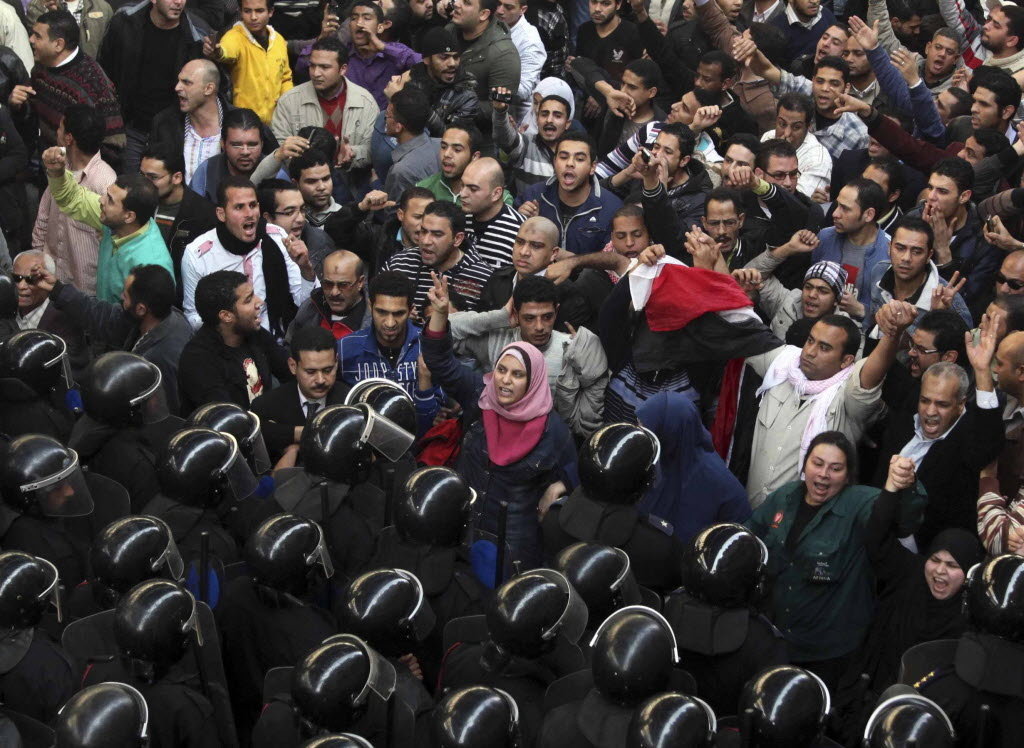
News From Egypt / a blog written during the revolt of Egypt in Cairo Now! News from riots in Egypt here and now


Revolution People!Revolution!


"The People Wants to bring Down the Regime"


Void Network hosts here the link of a fine blog written directly in Cairo and trying to spread news and opinions from Egypt underground to the insurrectionists and people from all over the world who express solidarity to the struggle of Egyptian people.


This blog is a collection of comments, contributions and visual media from the Egyptian uprising. It is sent out from one of the few locations in Cairo with an internet connection. Mubarak’s regime cut the internet to the country ahead of a call for a day of rage. The consequences of this day have gone beyond any expectations.
“The people want to bring down the regime” has become the most common chant on the streets.

please use the contact of the blog or the email
voidinternational@gmail.com
to send reports, news, opinions and messages of solidarity to the Egyptian people who struggle for
Total Freedom, a freedom that goes beyond the limitations of state, religion, class, gender, race or ethnicity


Monday, January 24, 2011

"Tunisia: Multitude in Revolt" from Moment of Insurrection


intro about the revolt in Tunisia
by Workers Solidarity Movement:

Friday 14 January 2011 -- After a dramatic 24 hours when Tunisia's dictator president Ben Ali first tried promising liberalisation and an end to police shootings of demonstrators and then, this evening at 16:00, declaring martial law, he has finally fallen from office. While the rumours are still swirling, one thing is clear, Ben Ali has left Tunisia and the army has stepped in.
The day began with a mass demonstration called by Tunisia's trade union federation, the UGTT, in the capital Tunis. Between 10 and 15,000 people demonstrated outside the Ministry of the Interior. The initially peaceful scene broke down at around 14:30 local time as police moved in with tear gas and batons to disperse the crowd, some of whom had managed to scale the Ministry building and get on its roof. From then on, the city centre descended into chaos with running battles between the riot police and Tunisians of all ages and backgrounds fighting for the overthrow of the hated despot.
Finally, armoured cars from the army appeared on the street and a state of emergency and curfew was declared with Ben Ali threatening the populace that the security forces had carte blanche to open fire on any gatherings of more than three people. Soon, however, he disappeared from view and the rumours began to circulate. The army seized control of the airport and there were reports of convoys of limousines racing to the airport from the Ben Ali families palace. Finally the official announcement came. Ben Ali is gone. Prime Minister Mohammed Ghannouchi appeared on state TV to announce that he was in charge of a caretaker government backed by the army.
Tonight the long-suffering people of Tunisia may rejoice that their last four weeks of heroic resistance has finally seen off the dictator who ran the most vicious police state in North Africa over them for the last 23 years.
But tomorrow morning will find the army in charge. What will happen tomorrow and the days to follow is anybody's guess. But the people now know that they have the power to overthrow a long-entrenched dictatorship, how much easier to take on a new unstable regime.

find more info, videos and reports here:


"Tunisia: Multitude in Revolt" from Moment of Insurrection

Revolt of the multitude
The situation in Tunisia is a rupture brought into being by the militancy of the multitude. There is no party or leadership, no unions or even a class that has forced this situation – rather, it is a multitude. The multitude defined not as the people, not a mass, not as a set of individuals.  It is defined as a network of singularities, where these singularities – in order not to become reduced to chaos – recognize themselves in a common that extends beyond them. The intensity with which power is being swarmed by the multitude clearly articulates the militant position. The fact that the hole blown wide open has not been filled by oppositional political stand-ins, or suppressed by military might shows the potential flight this situation is in the process of becoming – the reproduction of the insurrectionary situation that brings into being a maximally revolutionary event that until such rupture did not exist, and in fact seemed impossible just prior (–‘it could never happen in Tunisia’). It was not a chance taken within a revolutionary situation, but rather a militant movement imposed upon a reality that believed itself to be impenetrable (–Tunisia over the last couple days has been described by media as having been both ‘the most modern African state’ and consequently, ‘a totalitarian police state’). This moment of insurrection is not static and can swing in any direction or reaction; the nation-state of Tunisia and the histories of those breaking free from it, outline such potentialities.

Carthage is burning!
The product of an ancient lineage of foreign occupation, Tunisia was first colonized by the Roman Empire in 146 BC. The Arab invasion in the 7th century lasted until 1882 when the Europeans fought it out amongst themselves for control which finally ended in French domination. In 1942 the Nazis took over until finally ousted by a popular nationalist movement that was subsequently able to kick out the French in a campaign of armed struggle between the years of 1952-55. This ushered in the on-going reign of neo-colonialism. The party that controlled Tunisian society and imprisoned the indigenous populations within its borders has undergone a number of name changes and even flirted with ideological deviations including mass collectivization of land and nationalization of industry, as well as support for Palestinian resistance. The socialist facade dissolved in the toxic dumping of liberalism in the 70’s – which in turn unleashed waves of mass revolt that left dozens dead in the rioting which mirrors the images being transmitted from Tunisia today. In reaction to the popular unrest a new prime minister was imposed in 1980 and implemented the apparatus of fascistic control that is now being torn asunder. In a decade-long exchange of blows between the state and society – in which the state resorted to the mass imprisonment and killings – Ben Ali (last seen running for his life) was crowned under the latest party handle: the Democratic Constitution Rally. He went on to solidify his position by further negating hard fought rights and banning most oppositional parties.  It is this process that returns the rupture of revolt.

Social war against empire
The multitude that now holds the popular position is not unfamiliar with the reoccurrence of domination under the various guises of counter-revolution. The success of the revolt thus far has been its assemblage of tactics and strategy which deterritorialze the urbanism into smooth space.  This in turn ensures the movement’s agility in the streets, its velocity in concentration of power and dispersal of forces, its unity of mass and transmogrification of attack. Conducted dually with the mobilizations of popular power has been the rearguard battles fought out with rocks, burning barricades and armed struggle. Without the communal-militarization of the social unrest, the state’s military and police forces would have succeeded in putting down the upheaval as they had before on several occasions. And that crux is now the major theatre of operations – currently being conducted within the state of emergency: the armed communization of the multitude, who behind their barricades are defending their territory from the forces of command– the police, army, politicians and death squads who are at the behest of empire, in the dire attempt to ‘regain order’.

Further underlining the mode of the multitude is the reality of the total social upheaval. That society has been subsumed by capital throughout empire is met in consequence by the configurations of the multitudes revolt. A social war not isolated to any one contradiction; where all antagonisms are played out over the entire social terrain– not confined to the workplace or parliaments, and thereby unable to be institutionally mediated in isolation. The social war that is revolutionizing society in Tunisia has its equal force throughout the planetary upheavals now rupturing empire in a global civil war. In the bordering nation-state of Algeria the rocks are hurled and barricades built with the might and subjectivity of the same multitude, which disperse along the similar lines of flight that are transversed through that region by the millions of nomadic people who have for millennia been at war.

Nomad War Machine
Within the fortress state of Tunisia, convoys of ‘Imazighen’ (free people) make their way through the southern lands. The Bedouin and Berbers and nomadic and have violently fought off state appropriation. ‘The war machine is that nomadic invention that in fact has war not as its primary object but as its second-order, supplementary or synthetic objective, in the sense that it is determined in such a way as to destroy the State-form and city-form with which it collides.’ As many nomads have been economically forced to migrate to the cities as wage-slaves, we can assume that the tendencies of the nomadic war machine have been recommunized there – the necessity to flee from the state, but while doing so, grabbing a weapon.

Exodus
It is in this exodus from the state apparatus that the Tunisian multitude-in-motion must continue. The popular power in the streets has left power in the gutter, can it be gathered and used to smash the state, or will it be re-conquered by empire now circling overhead? At the height of unrest the prisoners in many prisons across Tunisia knew how it must be done, they did not wait for the political outcome, but forced their way through the concrete walls of reality. In one case a fire set during the prison revolt led to the mournful killing of many insurgents shot whilst fleeing the flames; in other prisons they escaped by forcefully taking control. Without being able to rely upon the forces of command, now bunked down in the street fighting – the prison guards were in no position to defend the institution and the prisoners walked out. It is our hope that they are able to return to destroy the prisons once and for all. It is our desire to do the same here.

article originaly published here:


Monday, January 17, 2011

On the Commons: A Public Interview with Massimo De Angelis and Stavros Stavrides


An Architektur: The term “commons” occurs in a variety of historical contexts. First of all, the term came up in relation to land enclosures during pre- or early capitalism in England; second, in relation to the Italian autonomia movement of the 1960s; and third, today, in the context of file-sharing networks, but also increasingly in the alter-globalization movement. Could you tell us more about your interest in the commons?
Massimo De Angelis: My interest in the commons is grounded in a desire for theconditions necessary to promote social justice, sustainability, and happy lives for all. As simple as that. These are topics addressed by a large variety of social movements across the world that neither states nor markets have been able to tackle, and for good reasons. State policies in support of capitalist growth are policies that create just the opposite conditions of those we seek, since they promote the working of capitalist markets. The latter in turn reproduce socio-economic injustices and hierarchical divisions of power, environmental catastrophes and stressed-out and alienated lives. Especially against the background of the many crises that we are facing today—starting from the recent global economic crisis, and moving to the energy and food crises, and the associated environmental crisis—thinking and practicing the commons becomes particularly urgent.

A New Political Discourse: From Movement to Society

Massimo De Angelis: Commons are a means of establishing a new political discourse that builds on and helps to articulate the many existing, often minor struggles, and recognizes their power to overcome capitalist society. One of the most important challenges we face today is, how do we move from movement to society? How do we dissolve the distinctions between inside and outside the movement and promote a social movement that addresses the real challenges that people face in reproducing their own lives? How do we recognize the real divisions of power within the “multitude” and produce new commons that seek to overcome them at different scales of social action? How can we reproduce our lives in new ways and at the same time set a limit to capital accumulation?
The discourse around the commons, for me, has the potential to do those things. The problem, however, is that capital, too, is promoting the commons in its own way, as coupled to the question of capitalist growth. Nowadays the mainstream paradigm that has governed the planet for the last thirty years—neoliberalism—is at an impasse, which may well be terminal. There are signs that a new governance of capitalism is taking shape, one in which the “commons” are important. Take for example the discourse of the environmental “global commons,” or that of the oxymoron called “sustainable development,” which is an oxymoron precisely because “development” understood as capitalist growth is just the opposite of what is required by “sustainability.” Here we clearly see the “smartest section of capital” at work, which regards the commons as the basis for new capitalist growth. Yet you cannot have capitalist growth without enclosures. We are at risk of getting pushed to become players in the drama of the years to come: capital will need the commons and capital will need enclosures, and the commoners at these two ends of capital will be reshuffled in new planetary hierarchies and divisions. 

The Three Elements Of The Commons: Pooled Resources, Community, And Commoning

Massimo De Angelis: Let me address the question of the definition of the commons. There is a vast literature that regards the commons as a resource that people do not need to pay for. What we share is what we have in common. The difficulty with this resource-based definition of the commons is that it is too limited, it does not go far enough. We need to open it up and bring in social relations in the definition of the commons.
Commons are not simply resources we share—conceptualizing the commons involves three things at the same time. First, all commons involve some sort of common pool of resources, understood as non-commodified means of fulfilling peoples needs. Second, the commons are necessarily created and sustained by communities—this of course is a very problematic term and topic, but nonetheless we have to think about it. Communities are sets of commoners who share these resources and who define for themselves the rules according to which they are accessed and used. Communities, however, do not necessarily have to be bound to a locality, they could also operate through translocal spaces. They also need not be understood as “homogeneous” in their cultural and material features. In addition to these two elements—the pool of resources and the set of communities—the third and most important element in terms of conceptualizing the commons is the verb “to common”—the social process that creates and reproduces the commons. This verb was recently brought up by the historian Peter Linebaugh, who wrote a fantastic book on the thirteenth-century Magna Carta, in which he points to the process of commoning, explaining how the English commoners took the matter of their lives into their own hands. They were able to maintain and develop certain customs in common—collecting wood in the forest, or setting up villages on the king’s land—which, in turn, forced the king to recognize these as rights. The important thing here is to stress that these rights were not “granted” by the sovereign, but that already-existing common customs were rather acknowledged as de facto rights.

You can continue reading this dialogue here:

Saturday, January 15, 2011

Meet "JR", a street artist and activist


JR exhibits his photographs in the biggest art gallery on the planet. His work is presented freely in the streets of the world, catching the attention of people who are not museum visitors. His work mixes Art and Action; it talks about commitment, freedom, identity and limit.
JR’s career as a photographer began when he found a camera in the Paris subway. In his first major project, in 2001 and 2002, JR toured and photographed street art around Europe, tracking the people who communicate their messages to the world on walls. His first large-format postings began appearing on walls in Paris and Rome in 2003. His first bookCarnet de rue par JR, about street artists, appeared in 2005.

In 2006, he launched “Portrait of a Generation,” huge-format portraits of suburban “thugs” from Paris’ notorious banlieues, posted on the walls of the bourgeois districts of Paris. This illegal project became official when Paris City Hall wrapped its own building in JR’s photos.
In 2007, with business partner Marco, he did “Face 2 Face,” which some consider the biggest illegal photo exhibition ever. JR and a grassroots team of community members posted huge portraits of Israelis and Palestinians face to face in eight Palestinian and Israeli cities, and on both sides of the security fence/separation barrier.
He embarked on a long international trip in 2008 for his exhibition “Women Are Heroes,” a project underlining the dignity of women who are the target of conflict. In 2010, the film Women Are Heroeswas presented at the Cannes Film Festival and received a long standing ovation.
JR is currently working on two projects: “Wrinkles of the City,” which questions the memory of a city and its inhabitants; and Unframed, which reinterprets famous photographs and photographers by taking photos from museum archives and exposing them to the world as huge-format photos on the walls of cities. It asks the question: What is the art piece then? The original photo, the photo “unframed” by JR or both?
JR creates pervasive art that spreads uninvited on buildings of Parisian slums, on walls in the Middle East, on broken bridges in Africa or in favelas in Brazil. People in the exhibit communities, those who often live with the bare minimum, discover something absolutely unnecessary but utterly wonderful. And they don’t just see it, they make it. Elderly women become models for a day; kids turn into artists for a week. In this art scene, there is no stage to separate the actors from the spectators.
After these local exhibitions, two important things happen: The images are transported to London, New York, Berlin or Amsterdam where new people interpret them in the light of their own personal experience. And ongoing art and craft workshops in the originating community continue the work of celebrating everyone who lives there.
As he is anonymous and doesn’t explain his huge full-frame portraits of people making faces, JR leaves the space empty for an encounter between the subject/protagonist and the passerby/ interpreter.
This is what JR is working on: raising questions…
Portrait of JR photo credit: © Christopher Shay
All other photos credit: © jr-art.net
article written by :
http://www.tedprize.org/congratulations-to-the-2011-ted-prize-winner-jr/


we invite you to see this interesting video about the life and 
street art actions of JR: