Showing posts with label gender politics. Show all posts

Friday, February 6, 2015

"How to Uphold White Supremacy by Focusing on Diversity and Inclusion. Liberalism’s inherent racism." by KYRA a Chinese-Amerikan trans woman working to create space for radical racial justice


Since the civil rights movement, white people have exploited every opportunity to conceal their colonialist legacy and longstanding (ab)use of white supremacist power. They’ve proven time and again that they have no interest in rectifying that history, only in dealing with the fact that they could no longer deny the reality of those injustices. One effective tactic has been to separate white supremacy and colonialism from the way racism is understood and taught through schools, history textbooks, news media, and through any white-controlled institutions. These lessons, of anti-racism as-told-by-white-people, will be familiar to you: that racism is only explicit racial prejudice; that separatism is the essence of Jim Crow (and therefore inclusion is the antithesis to de jure segregation); and that the remedy for a racist society is a colorblind one.

All of these assumptions are grounded in liberalism: the egalitarian principle which works to ignore and erase difference rather than to undo oppression. It strives for a post-feminist, post-queer, post-racial or racially colorblind world. Liberalism as an ideology deems equal rights and equal treatment as a higher priority than  material justice, or as an effective means towards  it. Its presumptions of equality are false, as individualist equality may be written into law and policy while material inequality thrives. It effectively abstracts and obscures power dynamics along lines of race, class, and gender. The difference between material justice and liberalism is the difference between actually making reparations for a long history of racism and countries like Austria, Finland, Hungary, France, and now Sweden removing all mentions of “race” from their legislation.

Liberalism is not the opposite of conservatism on a left-right political spectrum, but a set of values that informs various other political ideologies including conservatism and libertarianism. Even the most popular manifestations of feminism and radical political thought (anarchism, communism, and socialism) are their most liberal forms. You can recognize the influence of liberalism in any political philosophy or practice that ,  consciously or not ,  focuses on individual equality before social power. What is it that says that ending racism means setting aside our differences and finding commonality? Liberalism. What is it that says that we need love to bring us together and to end the hate which drives us apart? Liberalism. What is it that says to choose unity over disunion? Liberalism. What is it that says racism/sexism/sizeism hurts everyone? Liberalism.

All of these ideas value a certain perception of equality at the expense of those who suffer due to social inequality. That’s why you’ll notice this rhetoric so frequently employed to dismiss oppressed people who direct their anger…at their oppressors. Through a white-writing of history (and history textbooks) that erases and minimizes all of the revolts that were necessary for change, liberals are able to demand that protesters remain totally peaceful, pacifist, and nonviolent (by which they mean non-destructive of property) in the face of dehumanization, degradation, and absolute repressive violence (the actual destruction of human life). White liberals and their sympathizers take ideas and quotes from Martin Luther King out of context and use them to shame disruptive protesters as rioters and looters, dismiss more militant activists as spiteful and vengeful, blaming them all for their own conditions.

The toxic effects of liberalism are clear in diversity advocacy and its language. Take the reframing of affirmative action as an initiative to promote diversity. Affirmative action was created in recognition of a centuries-long legacy of racism and historically discriminatory hiring/admissions practices. It is remedial in nature, and requires the recognition of past and ongoing wrongs that need to be righted. In stark contrast to this, diversity emphasizes the pragmatic benefits to morale, productivity, and profits. Diversity is the practice of mixing together different bodies within a common organization, and is a prime resource to be capitalized upon by businesses and organizations that are white owned and/or operated. Diversity still benefits those in power by taking advantage of the various experiences and vantage points of different racial/gender/sexual backgrounds. Rather than respecting difference and redistributing power based on it, diversity only “celebrates” difference in order to exploit multiculturalism for its economic value.

There is a reason that diversity is consistently promoted as being beneficial to everyone, disregarding who benefits most from various arrangements of diversity. As a dominant mode of thought, we must challenge liberalism if we hope to challenge the structures of domination that it both masks and reinforces, through diversity or otherwise.

“Inclusivity” and “exclusivity” are politically meaningless without context and divert attention away from specific power dynamics. In common use, they are assigned inherently positive and negative values without specifying who is being included or excluded. This is why you might see a group proudly promote itself as being more “open” and “inclusive” than a group which is intentionally exclusive to create a safer space for a specific marginalized group. This is because de jure segregation is so strongly associated with racism. Still, segregation is not racist in and of itself. It is racist depending on a history of white supremacy, depending on who is enforcing segregation, and depending on the material impact of said segregation.

While after a history of slavery and Jim Crow segregation, fighting for desegregation was obviously necessary, but that progress is not inherent to diversity and inclusion. They are only valuable insofar as they reduce a white stronghold on power. How would racial diversity or the inclusion of men benefit the organizational team behind Black Girl Dangerous? What about organizations like the Trans Women of Color Collective or INCITE! which could only be opened to more racial diversity through the inclusion of whites? Diversity and inclusion whitewash and undermine the very basis of their value for racial justice and feminism: providing access to resources, representation, and power to identity groups that lack them. Not only is “inclusivity” politically meaningless, but to frame the benefits of stronger representation of marginalized races, genders, etc. within “diversity” gravely strips the progress it provides of its power and political significance. There is then danger in uncritically advocating for—or even just discussing power dynamics in terms of—diversity or inclusivity.

Closed spaces for marginalized identities are essential, especially ones for multiply marginalized identities, as we know from intersectionality (not to be confused with the idea that all oppression is interconnected, as many white women who have appropriated the term as self-proclaimed “intersectional feminists” seem to understand it). Any group, whether organized around a shared marginalized identity or not, will by-default be centered around the most powerful within that group. For example, cisgender white women will dominate women’s groups that aren’t run by or consciously centering trans women and women of color. A requirement for all groups to be fully open and inclusive invites the derailment and silencing of marginalized voices already pervasive in public spaces, preventing alternative spaces of relative safety from that to form. Hegemony trickles down through layers of identity, but liberation surges upwards from those who experience the most compounded layers of oppression.

So why do so many people seeking racial justice, female empowerment, and queer liberation still choose to advocate for “diversity” and “inclusion”? They appeal to liberalism. They prevent oppression from being named. They prevent us from speaking truth to power. They make progress sound friendly to those in power. Companies can tokenize women and people of color throughout their advertising. They can get way more credit than they deserve for being not 100% white men. They can profit from the increases in efficiency and productivity associated with more diversity. All of the above ignore the fact that companies needed to have diversity initiatives to make them less overwhelmingly white in the first place; that white people are the ones in the position of being able to grant access in the first place. When we work for justice and liberation, we can’t accept progress that is conditional on being economically beneficial.

The only way to prevent that is to name oppression for what it is; to speak truth to power. If a group is dominated by whites, men, and other privileged classes, don’t let that be reduced to a diversity issue.

You may have seen the phrase before and possibly even used it yourself, but if you still focus on inclusion and diversity, you don’t truly understand: assimilation ≠ liberation. When we talk about diversity and inclusion, we necessarily position marginalized groups as naturally needing to assimilate into dominant ones, rather than to undermine said structures of domination. Yes, we need jobs; we need education; we need to access various resources. What we don’t need is to relegate ourselves to the position of depending on someone else to offer us inclusion and access to those resources. Inclusion is something they must give, but our liberation is something we will take. The cost of assimilation is always in the well-being and lives of those who are not close enough to power to be able to assimilate. Another less popular expression of our expression more sharply calls attention to these dangers of uncritical integrationism: assimilation = death.


>>> 
Kẏra is a Chinese-Amerikan trans woman working to create space for radical racial justice through technology where progress has been limited to liberal white feminism. She serves on the board of directors of the Free Culture Foundation and founded the Empowermentors Collective, a skillshare, discussion, and support network for trans, disabled, and queer people of color who share a critical interest in race, gender, and technology. She Tweets in spurts and bouts @kxra.

source: https://modelviewculture.com/pieces/how-to-uphold-white-supremacy-by-focusing-on-diversity-and-inclusion


Saturday, March 23, 2013

"Rape Happens": The ‘normalcy’ of violence—sexual violence being the most perverted—is India’s lot. One girl’s nightmare focuses the light.


“Didi has always made us proud. Aisa kabhi nahin hua ki hamein unki wajah se kuchh sunna pada. Woh hamare parivar ka garv hai (We never had to hear anything on account of her. She is our family’s pride),” say the two brothers (18 and 20 years old respectively) of the girl whose rape and brutalisation a fortnight ago has stirred the whole nation. They were seated outside her ICU room at Safdarjung Hospital in New Delhi, hours before she was flown out to Singapore for further treatment.
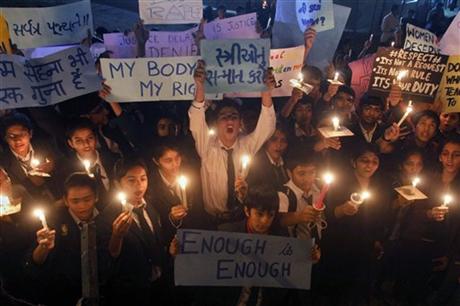
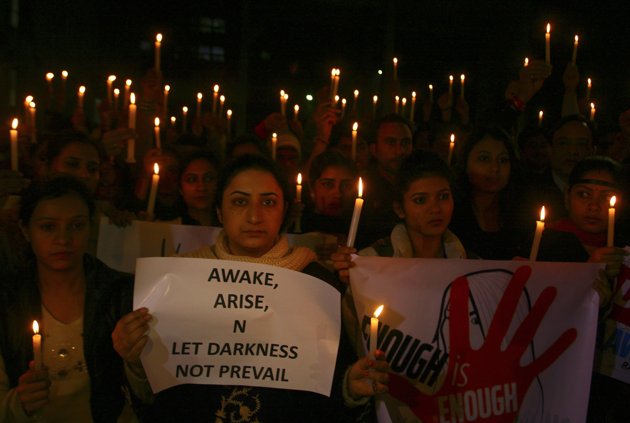
It often takes one crime or individual to be the pivot of an issue that had never hitherto received its due attention. The young girl, who was the victim of brutal gangrape and savagery has become just that: a hero for thousands across the country. As Jagruti continues to fight for a life that will have to be reconstructed with a lot of medical help and her own tremendous will, fighting alongside her is a whole gamut of Indians: from big towns and small, students and professionals, middle-class individuals to activist groups, women, and men. They are marching in protest, holding candle-light vigils, and venting ire on social networking sites. We at Outlook have decided to name her Jagruti: the awakening. She is our woman of the year.
“I feel for this girl from my heart,” says Valerian Santos, father of Keenan, who was killed last year after he and his friend Reuben tried to intervene in a sexual harassment case in Mumbai. “Perhaps more than my son.... I was crying for her.”

Singapore-bound Jagruti being taken to the airport. (Photograph by Hindustan Times)

Till the other day, Jagruti was like any other ordinary girl, who had gone for a movie with a friend and was coming back home by bus. Her friend’s objection to lewd comments by six men on the bus visited upon her a nightmare from which only death seems to promise an early exit. If she fights off the physical odds, which we hope she will, full emotional recovery will likely take longer. Gratifyingly, Jagruti has shown immense determination so far, telling her friend who was with her through the ordeal, “mujhe sangharsh karna hai (I have to fight)” when he went to Safdarjung Hospital to meet her (see interview).
Rape is a sordid reality in India, in all its gruesome manifestations (see column by Meena Kandasamy), so routine that, most often, it evokes no notice. Jagruti’s case has brought the reality closer home, shaking the indifference of middle-class India, reminding them how vulnerable women are in a world both modern and traditional, a world with antiquated attitudes towards women, a world of strange predators in the guise of men, a world of perverts who prey on children....


Photograph by Jitender Gupta

And so the anger erupted. There was the genuine citizen came to express his or her solidarity, along with the curious onlooker, the rabble-rouser and those keen to get a piece of the political and human action. The media kept a constant vigil as  well, both outside the hospital where Jagruti lay and with relentless coverage, in print and on television.


First, the political class treated the protesters as an administrative problem, then they started to deliver political homilies.

A political class with credibility should have been able to strike a chord with protesters expressing human concerns. Instead, they first treated the process as an administrative problem, then started to deliver political homilies. Eventually, the scale of public outrage compelled high offices to speak up: the prime minister on television, the President and the Lok Sabha Speaker, a sitting judge of the Supreme Court. The government also set up several committees to look into the incident as well as the overall issue of women’s safety. Union minister of state for home R.P.N. Singh told reporters that photographs, names and addresses of the rapists will be uploaded on the Delhi police website (www.delhipolice.nic.in). He also said the government-run National Crime Records Bureau had been told to prepare a directory of convicted rapists and upload their photos and personal details on its official website (www.ncrb.nic.in). But the statistics remain depressing. The young Akhilesh Yadav, on assuming the chief ministership of Uttar Pradesh, had promised to deliver better law and order. In the 10 months of his leadership, 35 cases of minor girls being raped and killed have been registered. There were 1,895 rapes in the state in 2011. “There is no denying that men are getting increasingly insolent in committing crimes against women,” says Arun Kumar, the state’s additional director-general of police. “In fact, the women’s powerline service that we launched to curb harassment of women through crank calls received 61,000 complaints in just one month.”
In Mumbai, the Maharashtra State Commission for Women has been without a chief for four years. “It’s meaningless to have a commission without a head as no one can put pressure on the government to act,” says a former chairperson. “Women actually have no one to go to now.” In fact, fed up with the inaction of the administration and the corruption of the police, victims of sexual abuse in Lucknow have organised themselves under the banner of what they call the Red Brigade. Comprising largely of young girls in the 17-25 age group, they wear red kurtas and black salwars and help victims fight rape cases in court.


Felled by the mob? Grieving family of Delhi cop Subhash Tomar. (Photograph by Jitender Gupta)


Jagruti’s case has become a lightning rod for all such women across the country. There is outrage in Calcutta as well and as sociologist Bula Bhadra there says, “The act of rape, as the one that happened in Delhi, is the manifestation of a complex social problem which does not have a ready solution. It requires a complete overhaul of the system where we look at many different aspects of society. From the patriarchal content of our children’s textbooks to the manner in which advertisements portray women, society is perennially conditioned to treat women as subservient. Rape and molestation of women in our society is a reflection of this.”
Indeed, women in India regularly deal with objectification, trivialisation and different forms of sexual harassment. Jagruti is typical of the young urban woman in modern India—educated, ambitious, wears western clothes, visits malls, watches movies, uses public transport—yet struggles to negotiate her space in a society ruled by archaic values.
The eldest of three siblings, Jagruti had just finished a four-year course in physiotherapy at a private medical college in Dehradun. Her father, who has a modest job in the aviation sector in Delhi, had sold his ancestral land in his UP village to ensure an education for all his children. He thought himself a “lucky man” as his children were the first generation to be educated in his family. His daughter was doing her internship before she would start her career as a paramedic.
She was alert, say doctors, when she was brought into emergency at the All India Institute of Medical Sciences before she was taken to Safdarjung Hospital. Her state had left even the hardened doctors shaken. The unspeakable acts of bestiality had ruptured her intestines and damaged her reproductive organs. The doctors did not think she would survive the night. At the time of writing, she has survived a fortnight.
Her condition looked “positive” in the first three days, with her being able to communicate clearly with the doctors through writing. She told the doctors that her throat felt itchy with the ventilator. She had written—“there is irritation in my throat, please clean it with suction”—according to Safdarjung Hospital medical superintendent B.D. Athani. A paramedic herself, Jagruti perhaps understands her situation better. She has had to give her statement to the subdivisional magistrate twice, partially in writing, with gestures and responding to questions.
However, once the infection spread, her condition deteriorated, with doctors claiming that the iron rod inserted into her body could lead to septicemia. She has already been through three major surgeries in the last 10 days, one in which most of her large intestine had to be removed. Then she developed respiratory problems and suffered two cardiac arrests. She was critical before being flown to Singapore for organ transplant.


Although her family is grateful for all the support and help, they are upset over the problem between the SDM and the police over taking their daughter’s statement. Says D.K. Mishra, uncle of the male friend who was with Jagruti, “This fight between the police and SDM has been very disappointing and diverts the focus from the issue. One should not go after publicity in such sensitive issues wherein every word matters. It would have been encouraging had it been handled more responsibly.”


“From the patriarchal content of textbooks to ads portraying women, our society’s conditioned to treat women as subservient.”

Likewise, while people have every right to express this scale of indignation at what happened to Jagruti, they also have to be responsible in their reactions and desist from vigilantism. “Hang them,” has been almost the universal reaction, and castration a close alternative. It brings to mind the December 2008 incident in Andhra Pradesh when two women engineering students of Warangal—T. Pranitha and K. Swapnika—became victims of an acid attack by three young men. The main accused, Srinivas, was apparently targeting Swapnika as she had spurned his advances. People were angry, and three days after the attack, the police shot dead all three, allegedly “in self-defence”. Swapnika died a month later. Human rights activists raised the issue of “mob justice”, but to this day, the then Warangal SP, V.C. Sajjanar, is hailed as a hero for the “encounter” and “instant justice” he delivered. The Lucknow-based Red Brigade, of whom we have spoken earlier, also admit to vigilantism. “Yes, we believe in public thrashing of people who indulge in physical exploitation of women or sexual abuse with minor girls,” asserts Usha Vishwakarma, the brigade’s ‘commander’. Basically, it speaks of a yawning deficit in justice delivery, which the people are themselves seeking to fill.
The rage in Jagruti’s case has been unprecedented. But it should not make us blind. The outrage has touched various strands of society. But there cannot be a kneejerk reaction to a complex issue. Even on the night Jagruti was being flown out to the state-of-the-art Mount Elizabeth Hospital in Singapore, a 42-year-old woman was gangraped by three men in a vehicle and then dumped in Kalkaji in south Delhi, some kilometres away from the mall Jagruti and friend had gone to and returning from where they had boarded a bus that was to become a chamber of horrors.

Rape And Our Politicians
No sitting member of the Lok Sabha faces a rape charge
  • Six persons who declared that they had rape charges against them contested the 2009 Lok Sabha elections. Of them, one is from the Rashtravadi Communist Party, one from the RPP, a third from the Bahujan Samaj Party, another from the Jharkhand Mukti Morcha while two were independent candidates.
  • Political parties gave tickets to 27 candidates who contested state elections in the last five years and who declared they had rape charges against them. Of these, seven were independent, five from the SP, two each from the BJP and one from the Congress. Ten of these are from UP alone and five from Bihar.
  • Six sitting MLAs have declared rape charges against them. They are Sribhagwan Sharma (SP, Khurja, UP), Anoop Sanda (SP, Sultanpur, UP), Manoj Kumar Paras (SP, Nagina, UP), Mohammad Aleem Khan (BSP, Bulandshahr, UP), Jethabhai G. Ahir (BJP, Shahera, Gujarat) and Kandikunta Venkata Prasad (TDP, Kadiri, AP).
  • When Outlook called Paras, he said the Delhi gangrape incident was “shameful”. “The culprits should be punished. It’s an open-and-shut case.” But what about the charges against him? “They are politically motivated and were slapped on me by someone who was instigated by the BSP.”
Source: Individual affidavits/Association for Democratic Reforms
***

20 Horrific Cases Up To December 2012

 
  • 1973: Aruna Shaunbag: A junior nurse at King Edward Memorial hospital in Mumbai, tied with a dog chain, assaulted and raped by a ward boy. She lost her eyesight and has been in a vegetative state since. SC turns down mercy killing.
  • 1978: Geeta and Sanjay Chopra were kidnapped for ransom in Delhi in the infamous Ranga-Billa kidnapping case. The culprits raped Geeta before killing them both.
  • 1982: Tulasa Thapa, a 12-year-old Nepali girl, was repeatedly raped before being sold into prostitution. Ten months later, she was brought to JJ Hospital in Mumbai where she died of brain tuberculosis and three sexually transmitted diseases.
  • 1990: A 14-year-old school girl was raped at her residence in Calcutta and killed by a security guard. Dhananjoy Chatterjee was executed in August 2004, the country’s first hanging since 1995.
  • 1996: A 16-year-old girl was sexually harassed and assaulted continuously for 40 days by 42 men in Kerala. In 2000, a special court sentenced 35 persons to rigorous imprisonment but the Kerala High Court acquitted them in 2005.
  • 1996: 25-year-old law student Priyadarshini Mattoo was found raped and murdered at her house in Delhi. Ten years later, the Delhi High Court found Santosh Kumar Singh guilty.
  • 1999: The estranged wife of an Indian Forest Service officer, Anjana Mishra’s car was stopped at a desolate place on the outskirts of Bhubaneswar. She was gangraped in front of the friend she was travelling with.
  • 2002: A fourth-year medical student was gangraped at knifepoint on the terrace of the Khooni Darwaza monument situated on the busy Bahadurshah Zafar Marg in the capital.
  • 2003: Shari S. Nair, a teenaged girl hailing from Kiliroor, Kottayam, Kerala, was sexually abused after being promised roles in TV serials. Shari later died after giving birth to a daughter.
  • 2004: 32-year-old Thangjam Manorama was tortured and allegedly executed by personnel of the paramilitary force of 17 Assam Rifles stationed in Manipur, after being picked up from her house.
  • 2005: 28-year-old Imrana was raped by her father-in-law in Uttar Pradesh. The village elders and Sharia courts nullified her marriage saying her husband was now her son.
  • 2005: A Delhi University student was gangraped by four men inside a Santro for several hours and dumped in south Delhi, unconscious and without clothes.
  • 2009: Two young women were raped and murdered in Jammu under mysterious circumstances, allegedly by CRPF personnel. One of them was two months pregnant at the time.
  • 2010: A 30-year-old BPO employee was raped by five men near her home in south Delhi. The woman was pulled into a mini truck, raped repeatedly and thrown out two hours later.
  • 2011: A nine-year-old mentally disabled girl was raped on a Mumbai train in front of five other passengers. The child could not scream or shout or speak because she was disabled.
  • Feb 2012: A 37-year-old woman was gangraped in a car on Calcutta’s Park Street after coming out of a bar. Mamata Banerjee first said the case was cooked up to embarrass her government.
  • Dec 2012: An eighteen-month-old baby, the daughter of pavement dwellers, was found by her mother one morning covered in blood. Doctors said she had been raped and tortured.
  • Dec 2012: A two-year-old was raped, allegedly by her maternal uncle, and thrown into a thorny bush in Baroda, Gujarat. She died after being taken to the hospital.
  • Dec 26, 2012: A 20-year-old woman was allegedly gangraped by 10 people on the banks of Manimuktha river near Virudhachalam in Tamil Nadu, according to police.

By Amba Batra Bakshi and Chandrani Banerjee with Prachi Pinglay-Plumber and Prarthna Gahilote in Mumbai, Sharat Pradhan in Lucknow, Madhavi Tata in Hyderabad and Dola Mitra in Calcutta

source: http://www.outlookindia.com/article.aspx?283458

Saturday, December 22, 2012

India Gang-Rape protesters clashed with Police in Delhi / International Solidarity Message from Void Network


Void Network [Athens, London, New York, Rio De Janeiro] expresses international solidarity for all girls and boys of India fighting for the end of patriarchic opression and medieval gender inequality and erotic supression in India. We express our demands for change of social morals all over this world, we demand social equality, gender equality, freedom of expression, freedom of Love, end of supression of diversity, freedom for all beings in all around this planet. This is the time for REAL CHANGE! THIS THE TIME FOR REAL FREEDOM & EQUALITY!

NEWS REPORTS from India:

Gang-rape protesters face tear gas, lathicharge

Police used batons, tear gas and water cannon to turn back thousands of people marching on the presidential palace in intensifying protests against the gang-rape of a woman on the streets and on social media. The 23-year-old victim is battling for her life in hospital after she was beaten, raped for almost an hour and thrown out of a moving bus on a busy New Delhi street. he protesters, largely college students, are demanding the death penalty for the accused and safety assurances for women. The savage rape and torture occurred on Sunday night, when the woman and her male friend boarded a private bus in south Delhi after watching a movie. The woman was brutally and repeatedly assaulted by six men. Her male friend, who tried to save her, was also beaten up by the rapists. Both the girl and her friend were stripped and dumped by the roadside near the domestic airport, after the nearly 40-minute ordeal in a moving bus, that passed unchallenged through five different police check points while the ghastly act was underway.


(Yahoo India News report) 
 LATHI CHARGE ON PROTESTERS 
There is utter chaos outside North Block in New Delhi this morning as hundreds of protesters demanding justice for a 23-year-old medical student who was gang-raped in a moving bus on Sunday tried to break barricades and enter the premises. The police, to contain the crowd, had to resort to water cannons, lathi charge and finally tear gas shells.
( http://zeenews.india.com)


The girl victim of gang-rape 
died at 29 Dec. 2012 
NEVER FORGET-NEVER FORGIVE

NO MERCY FOR THE ENEMIES OF FREEDOM