Friday, February 8, 2013

Leave your myth in Greece (a peculiar junta)


After June's 2012 elections, a three-party coalition between the two former big corrupted governmental parties (neo liberal right wing “New Democracy” and neo liberal ex-social democrats PA.SO.K.) and a third social-democratic puppet (reformist left DIM.AR) has led the country into a peculiar coup regime with constitutional facade.

Although elected by the people the three together marginally pass 48% of total voters and also each one of them pledged not to participate in such a coalition, prior the elections.

After forming the government, many laws and constitutional rights have been infringed, let alone their promises to stop the austere measures promoted since 2010 by the EU and IMF leading to a recession worse than World War II and at least 3500 suicides .With the majority of the legislative body in their hands and with the judiciary being on their side long before this situation arised, there is little for the people to do on legal level.

On top of these, a huge infiltration of neonazi supporters inside police force and a far right agenda promoted by the leading party of  New Democracy and prime minister Antonis Samaras himself  has led in almost everyday violations on human rights, some of them going public on foreign media.This is only a cluster of what is really going on in Greece since last summer. Amongst them complaints of international organizations (such as Amnesty International and Human Rights Watch) which Greek government chooses to put in the drawer.

Please use these detailed reports as also investigate yourself  in the news and alternative media to inform the society around you about the social conditions in Greece now. Please forward this message.
Detailed examples of reports about the arising of totalitarianism in Greece:   
Altered mug shots spur probe into Grek police beatings | Reuters
Amnesty International Blasts Greece on Treatment of Asylum Seekers - SPIEGEL ONLINE
As Golden Dawn Rises in Greece, Anti-Immigrant Violence Follows - NYTimes.com
Athens anti-fascist motorcades: “Until the police protect immigrants, we'll do it ourselves” | The Observers
BBC News - Alarm at Greek police 'collusion' with far-right Golden Dawn
BBC News - Are Greek police 'colluding' with far-right Golden Dawn?
BBC News - Greece probes police 'beatings' as altered mug shots emerge
BBC News - Greek government urged to probe police abuse claims
BBC News - Greek police accused over racism and asylum rights
BBC News - The tourists held by Greek police as illegal migrants
Bill Frezza: Greece: How Long Until Junta?
Europe’s New Fascists - NYTimes.com
Fragkiska Megaloudi: Gay People Living in Fear in Greece
Foto-Fälschung : Griechische Polizei vertuscht Folter von Bankräubern - Nachrichten Politik - Ausland - DIE WELT
Golden Dawn has infiltrated Greek police, claims officer | World news | guardian.co.uk 
Greece flirts with tyranny and Europe looks away | Nick Cohen | Comment is free | The Observer
Greece scraps police protection for far-right lawmakers | Reuters
Greece, in 2012: fascists beating up people while the police look on | Yiannis Baboulias | Comment is free | guardian.co.uk
Greek anti-fascist protesters 'tortured by police' after Golden Dawn clash | World news | guardian.co.uk
Greek police accused of using protester as human shield | World news | guardian.co.uk
Greek police beat Korean tourist, stonewall investigation | Asia News – Politics, Media, Education | Asian Correspondent
Greek police beat up another ‘illegal immigrant’ who’s actually a tourist  
Griechenlands Schande - NZZ.ch, 19.10.2012
High police support for Greece's Golden Dawn - Al Jazeera Blogs
Kiwi says he was kidnapped, beaten by Greek police - National - NZ Herald News
La Policía griega manipuló fotografías de detenidos para disimular sus heridas - Público.es
Laurie Penny: It's not rhetoric to draw parallels with Nazism - Commentators - Voices - The Independent 
Los neonazis griegos asumen el trabajo de la Policía >> Crónica Negra >> Blogs Internacional EL PAÍS
Página/12 :: El mundo :: La policía maquilló los golpes
Selective zero-tolerance: is Greece really a democracy anymore? 


Please inform your fellow people about what is REALLY happening in Greece and DO WHATEVER as to pass a message to the Greek government and domestic capital, that such conditions are not approved by people of the world.

Read the whole report of Amnesty International about Police Violence in Greece here:
Police Violence in Greece:Not just "isolated incidents"

source:

Thursday, January 17, 2013

"Wrong to work! Two perspectives on the abolition of work" by Joseph Kay


ALL MUST WORK! declares the cabinet of millionaires. 'Workers not shirkers!', they implore. 'Strivers not skivers!' The divide-and-rule rhetoric trying to pit those in work against those without is as relentless as it is transparent. But what's so good about work anyway?
Junge Linke's short piece nicely skewers how attempts to mobilise resentment of claimants and the unemployed undermine even those in work who aren't claiming benefits. What I'd like to focus on is two perspectives on what an explicitly anti-work politics might look like.
Robocommunism
Traditionally, anti-work politics has been bound up with rising productivity and technological development. A famous passage from Karl Marx's notebooks, the 'fragment on machines', envisages a day when living labour moves to the side of a highly automated production process. Marx's son-in-law, Paul Lafargue, authored a polemic titled 'the right to be lazy', which proclaimed:
...not to demand the Right to Work which is but the right to misery, but to forge a brazen law forbidding any man to work more than three hours a day, the earth, the old earth, trembling with joy would feel a new universe leaping within her.
At the dawn of the 20th century, sociologist Max Weber suggested the protestant, and particularly Calvinist, work ethic was a significant factor in the rise of capitalism. Weber's thesis is considered unproven, but the glorification of work is certainly still with us, as the demonisation of claimants and the unemployed shows. Indeed, the introduction of workfare, Universal Credit and Universal Job Match threatens to transform unemployment into constant unpaid, supervised, psuedo-work - updating CVs, searching and applying for jobs, stacking shelves in Poundland... all subject to managerial discipline without even the sweetener of a wage.
Yet this is happening despite a big resurgence in the 'tech debate' from across the political spectrum - from neoliberals like Jeffrey Sachs, to Keynesians like Paul Krugman and comment pieces in the Financial Times, as well as the more usual anarchist and communist figures. Could it be that the renewed attempts to impose work on everyone masks a crisis of what Kathi Weeks calls 'the work society'?
The thrust of the argument here is that technology-driven productivity rises are driving ever-greater output with ever-lower requirements for labour. Foxconn's infamous iPhone manufacturing plant - the one with the suicide nets where workers have rioted and fought for better conditions - is facing automation by one million robots by 2013. When even intolerable sweatshop conditions are cheaper to automate, what future for work? There's even developing technology which can replace traditionally labour-intensive sectors such as fast food andfruit-picking. Add in bittorrent distribution of digital media and literature, 3D printing technology... and work starts to look quite quaint.
Under capitalism, this means rising unemployment, and intensified work at lower wages for those 'lucky' enough to keep their jobs (due to the competition from the 'reserve army' of the unemployed). Historically, the service industries have absorbed some of this surplus labour, but as they automate too, potential abundance and increased leisure for all instead translates into generalised misery.1 But only so long as we put up with capitalism.
This kind of techno-utopianism promises a quantitative abolition of work, down to Lafargue's maximum three hours a day and beyond. Just think how much labour-intensive work - like call centre cold-calling - is basically pointless except from the point of view of private profit. Abolishing capitalism - private ownership of the means of production, with consumption rationed by the market - promises to harness productivity improvements to reduce toil for everyone in a context of unprecedented abundance.
Rethinking 'work'
The technological optimism of the above account has been criticised from some quarters. Maria Mies, in her book 'Patriarchy and accumulation on a world scale', suggests 'the abolition of work' only makes sense if it takes the typically boring, repetitive - and male - production line work as its archetype.2 Mies suggests a redefinition of 'production' as 'the production of human beings' as opposed to 'the production of surplus value for capital', and suggests a radical rethink of work by replacing the archetypal figure of the production line worker with that of the mother.
A feminist concept of labour has to be oriented towards the production of life as the goal of work and not the production of things and wealth, of which the production of life is then a secondary derivative. The production of immediate life in all its aspects must be the core concept for the development of a feminist concept of work. (...) A feminist concept of labour has, therefore, to be oriented towards a different concept of time, in which time is not segregated into portions of burdensome labour and portions of supposed pleasure and leisure, but in which times of work and times of rest are alternating and interspersed. If such a concept and such an organisation of time prevail, the length of the working day is no longer very relevant.
Mies' account is not unproblematic, and is bound up with a somewhat romantic advocacy of a return to the subsistence agriculture of her childhood, and more than a hint of gender essentialism. For this reason, it would be good to read her alongside an explicitly anti-work feminist text such as Kathi Weeks' recent 'The problem with work'. However, I think Mies' reconception of work points towards a sort of 'qualitative abolition', that is, a breakdown between the separate spheres of 'work' and 'life', production and meaning.
Here, 'work' is understood as off the clock, variously affective, arduous, meaningful, frustrating, rewarding. Childcare not line assembly. (Re)producing life not value. It's undertaken not because of a need to earn money to survive, but because it directly contributes to the reproduction of people, whether by raising children, growing food, cultural activities and so on. As it's not production for the market, capitalist notions of efficiency fall by the wayside, and instead the focus is on making necessary toil tolerable through sharing the burden.
Mies views technology as embodying an instrumental relation to nature, which reflects a patriarchal logic of the domination of (male) culture over (female) nature. Hence she rejects the abolition of work through technology and instead advocates low-tech subsistence as an ecological, feminist alternative to both capitalism and state socialism. Her argument is well made, but I think a more emancipatory view of technology, informed by the feminist critique of the invisible domestic labour on which such utopias often rest, could see these two perspectives combined to good effect.
A critical application of technology could abolish, or at least dramatically reduce, repetitive toil, while rethinking production as the reproduction of life could abolish both the gendered division of housework and the capitalist production of care, in favour of something produced in common and distributed according to needs. Work, as a separate sphere of life would be abolished. In place of the pursuit of profit, ecological limits and human needs, including the abolition of boredom, would guide the production of things. Productive activity would consist in the reproduction of human beings in place of the relentless production of value. Do the conditions of this movement follow from premises now in existence?

Saturday, December 22, 2012

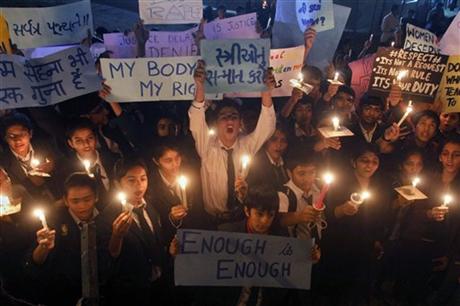
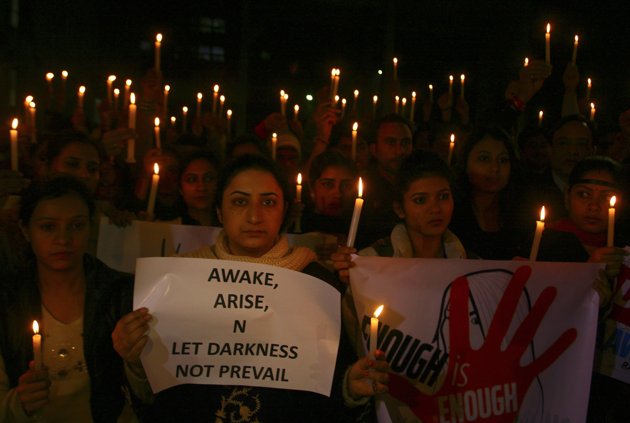
India Gang-Rape protesters clashed with Police in Delhi / International Solidarity Message from Void Network


Void Network [Athens, London, New York, Rio De Janeiro] expresses international solidarity for all girls and boys of India fighting for the end of patriarchic opression and medieval gender inequality and erotic supression in India. We express our demands for change of social morals all over this world, we demand social equality, gender equality, freedom of expression, freedom of Love, end of supression of diversity, freedom for all beings in all around this planet. This is the time for REAL CHANGE! THIS THE TIME FOR REAL FREEDOM & EQUALITY!

NEWS REPORTS from India:

Gang-rape protesters face tear gas, lathicharge

Police used batons, tear gas and water cannon to turn back thousands of people marching on the presidential palace in intensifying protests against the gang-rape of a woman on the streets and on social media. The 23-year-old victim is battling for her life in hospital after she was beaten, raped for almost an hour and thrown out of a moving bus on a busy New Delhi street. he protesters, largely college students, are demanding the death penalty for the accused and safety assurances for women. The savage rape and torture occurred on Sunday night, when the woman and her male friend boarded a private bus in south Delhi after watching a movie. The woman was brutally and repeatedly assaulted by six men. Her male friend, who tried to save her, was also beaten up by the rapists. Both the girl and her friend were stripped and dumped by the roadside near the domestic airport, after the nearly 40-minute ordeal in a moving bus, that passed unchallenged through five different police check points while the ghastly act was underway.


(Yahoo India News report) 
 LATHI CHARGE ON PROTESTERS 
There is utter chaos outside North Block in New Delhi this morning as hundreds of protesters demanding justice for a 23-year-old medical student who was gang-raped in a moving bus on Sunday tried to break barricades and enter the premises. The police, to contain the crowd, had to resort to water cannons, lathi charge and finally tear gas shells.
( http://zeenews.india.com)


The girl victim of gang-rape 
died at 29 Dec. 2012 
NEVER FORGET-NEVER FORGIVE

NO MERCY FOR THE ENEMIES OF FREEDOM

Saturday, December 8, 2012

Hungry Men | A Short Film by Yiorgos Bakalis


Capitalism has collapsed, and fat people have been driven out of society… a few of them,all living in the same house, form a revolutionary group without meaning. An anonymous, fat man lives above them. Their rent is collected by Nancy, a beautiful state official who has a double role. Everything changes when the leader of the group decides to eat the state officer for the cause of the revolution. Only one person in the house, who is asked to write the manifesto, knows about the leader's plan. The tension between the two, the role of the mysterious fat man, and his relationship with the state officer will lead to an unexpected decision ...

You can watch the whole film just clicking the below link 
http://youtu.be/Wnihq4qx52M

Cast
Stathis Stamoulakatos
Ermandos Soussis
Spiros Grammenos
Alexandros Parissis
Vaggelis Alexandris
Dimitris Kapetanakos
Iliana Mauromati

Script,Director: Yiorgos Bakalis
Yiorgos Bakalis is graduate of Staurakou Film school. The second short film, A peaceful Man, participated in international festivals and won prize “Honour Dinstriction” in Digi-2009 International Festival of Drama.

Assistant Director,Executive Producer: Spiros Kastanas
Director of Photography,Montaz: Aggelos Matzios
Set Designer: Maria Papadopoulou
Costumer: Aspasia Mpota
Sound Design: Vaggelis Lympouridis,Nikos Karavas
Music: Alexis Grapsas

Thursday, November 8, 2012

History: The Namibia Genocide.The first genocide of the 20th century. Horrifying Secrets of Germany’s Earliest Holocaust.


When you hear of Death Camps and Genocide, Nazi Germany and world war two come to mind. But Germany had practiced it’s murderous craft over sixty years before WWll. Before the Armenian Genocide, before the Jewish Genocide over 150,000 Herero and Nama peoples of modern-day Namibia were murdered by the order of Kaiser Wilhelm II of Germany between 1904 and 1909. 


Along the coastline of Namibia runs the Namib desert, a 1,200 mile long strip of unwelcoming sand dunes and barren rock. Behind it is the central mountain plateau, and east of that the Kalahari desert. Namibia’s scarcest commodity is water: this is a country of little rainfall, and the rivers don’t always run. 

But the very sand of the Skeleton Coast is the dust of gemstones; uranium, tin and tungsten can be mined in the central Namib, and copper in the north; and in the south there are diamonds. Namibia also has gold, silver, lithium, and natural gas.


For most of the region’s history, only metal was of interest to the native tribes. These tribes lived and traded together more or less peacefully, each with their own particular way of living, wherever the land was fertile enough. The San were nomads, hunters and gatherers. The Damara hunted and worked copper. The Ovambo grew crops in the north, where there was more rain, but also worked in metal. The Nama and the Herero were livestock farmers, and they were the two main tribes in the 1840s when the Germans (first missionaries, then settlers, then soldiers) began arriving in South West Africa.


 Before the Germans, only a few Europeans had visited it: explorers, traders and sailors. They opened up trade outlets for ivory and cattle; they also brought in firearms, with which they traded for Namib treasures. Later, big guns and European military systems were introduced. The tribes now settled their disputes with lethal violence: corruption of a peaceful culture was under way.
During The Berlin Conference Germany was awarded what is now called Namibia  and settlers moved in, followed by a military governor who knew little about running a colony and nothing at all about Africa. Major Theodor Leutwein began by playing off the Nama and Herero tribes against each other. More and more white settlers arrived, pushing tribesmen off their cattle-grazing lands with bribes and unreliable deals. The Namib’s diamonds were discovered, attracting yet more incomers with a lust for wealth. Tribal cattle-farmers had other problems, too: a cattle-virus epidemic in the late 1890s killed much of their livestock.The colonists offered the Herero aid on credit. As a result the farmers amassed large debts, and when they couldn’t pay them off the colonists simply seized what cattle were left.