A report on the working class struggles against austerity measures in Greece by Proles and Poor’s Credit Rating Agency aka TPTG a greek autonomous communist group.
In periods of crisis, such as the current period of overaccumulation crisis, capitalists use the politics of “public debt” in order to devise new ways to intensify exploitation. In contrast with capitalist upturns when the private debt is increased, downturns are characterized by the increase of the “public debt”. Private investment in state bonds ensures profits which are extracted from the direct and indirect taxation of the workers, aiming towards interest repayments, and leading, ultimately, to the reinforcement of the banking sector capital. Therefore, the “public debt”, contrary to what is usually said, provides help to private capital and, in this respect, should be counted in its profits.
Moreover, in the last 20 years, the “public debt” tripled in 20 out of 27 countries of EU because of massive expenditures for bailing out the financial sector. This is money that was not given through loans to (non-banking) private capital for productive investments. Furthermore, public borrowing was done and continues to be done on terms that exceed by far the average profit rate, making investments in state bonds far more profitable than investments for the creation of production units, and, all the more so, since this kind of investment is exempted from the risks of class struggle in the sites of production.
The global economic recession of the previous years, which is the most recent manifestation of the permanent crisis of reproduction of global capital in the last 35 years –a crisis interrupted only by temporary recoveries– inevitably affected domestic capitalist accumulation. However, apart from the consequences of the reduction of global economic activity to the exports of greek capital, especially in the shipping and the tourist sectors, it became also the peg for the revelation of the permanent crisis of exploitability and disciplining of the proletariat.
After a period between the mid 90’s and the mid 2000’s when capital had managed to increase the rate of exploitation and expand its profitability, the profitability of capital in Greece has been continuously slowing down in the last years because of the slow growth of productivity in relation to wages. As a result, it started to fall since 2006 onwards, until it collapsed in the first half of 2009 by 51.5% in relation to the same period of 2008, because of the global recession. The fall of the turnover and of the profitability of private enterprises led in turn to a significant reduction of investments because of the increasing inability of private enterprises to get credit from the banks. Moreover, banks were directly affected since their profits dramatically declined because of the significant increase of losses stemming from the overdue loans or even from the non-repayment of loans, having, in addition, a more general liquidity problem because of the global financial crisis.
Naturally, the state did not stay idle. It hurried to confront the problems that emerged because of the outbreak of the crisis by increasing its expenditure by 10.9% in 2009 in order to support capitalist accumulation, thus contributing to the GDP by 1.7%. At the same time the state provided banks with funds of 28 billion euros, which is an amount that corresponds to 11.5% of the GDP, in order to save their profitability. This policy will be continued by the government of PASOK which will provide an additional amount of 10 billion euros. Besides, public expenditures were increased for other reasons as well, such as, for example, the payments of the unemployment benefits since the number of unemployed workers has increased, while revenues from taxes and contributions were decreased because of the recession, i.e. the decline of GDP (and what’s more because of the consecutive decreases of the rate of taxation of profits in the last 20 years). Unsurprisingly, the result was that both public deficit and debt rose steeply to reach 12.5% and 112.6% respectively as a proportion of the GDP.
Since 2008, financial institutions have decided to invest mainly in government bonds which almost everywhere have multiplied because of the global state policies of bailing out banks. After the sovereign debt crisis of Dubai in last October and the failure of the credit rating agencies in forecasting it, these agencies went frantic to downgrade greek government bonds and upgrade Credit Default Swaps. The fact that the European Central Bank is going to raise the minimum credit rating for the eligibility of government bonds as collateral in liquidity provision from the start of 2011 encouraged the financial institutions holding greek government bonds to dump them, precipitating the “debt crisis” and raising the interest, which in its turn raised the cost of debt refinancing. Thus, public expenditures related to the payment of interest as well as forecasts for the increase of public deficit and debt have risen.
So, in a climate of fiscal terrorism that has been orchestrated for some months now by the media, a state of emergency has been called in Greece in an effort by international capital and the greek state to turn the country into a laboratory of a new shock policy. The huge ”public debt” and the ”imminent bankruptcy of the country” are the mottos used as efficient tools to terrorize and discipline the proletariat and legitimize the decrease of the direct and indirect wage and thus curb its expectations and demands in an exemplary neoliberal fashion of international proportions.
The mobilizations have been rather lukewarm so far and certainly do not correspond to the critical situation and the ferocity of the measures. There is a generalized feeling of impotence and paralysis but anger as well that cannot find a proper outlet. Certainly, there is a real discontent for the shock policy that the PASOK government is promoting (cuts on wages, cuts on benefits, more direct and indirect taxes, extension of retirement age, intensification of police control etc.) One can trace that discontent in the every day conversations in the work places, however, there is a prevailing fragile silence facing the dictatorship of the economy and the omnipotence of the “markets”. The “national unity” mantra is one of the government’s favourite tools, as expected in such times, however, it has not reached yet a dangerous point.
The union confederations, GSEE (the umbrella organization of the private sector unions) and ADEDY (the corresponding organization of the public sector) are totally controlled by the socialist government and do their best to avoid any real resistance against the recent offensive. At the moment, it seems rather improbable that the crisis and the pressure exerted to those dinosauric bodies by the rank ’n’ file will lead to major changes in their structure and function, if we consider the almost lethargic behaviour of the low in hierarchy union cadres of the socialist party who still win most of the votes in most workplaces.
On the 10th of February there was the first strike called by ADEDY with a rather low participation of strikers from the public sector. We will try below to give a description of the demo in Athens on the 24th of February when the first general strike against austerity measures was called by GSEE and ADEDY. The estimation on the number of people that went on strike is around 2-2.5 million. In some sectors (ports, shipyards, oil refineries, construction industry, banks and public service companies) the participation ranged between 70-100%. In the public sector (education, health, public services and ministries, post offices) the participation was lower, ranging between 20% to 50%.
Estimations on the number of the people that participated in the strike demonstration vary a lot. Police refer to 4,000, according to some media the number is 100,000 and some others talk of abοut 9,000 or 30,000 protesters. As participants, we can say that a number of about 40,000 people could be a reliable estimation.
Two were the main features of this demo. The first is the noticeable participation of many immigrants not only “under the command” of left-wing organizations but also diffused in the body of the demo. We have to mention that the participation of immigrants is currently related to the new law for “the citizenship of immigrants”, which creates divisions among them by categorizing them into those few eligible for citizenship and those thousands condemned into the no man’s land of illegality.
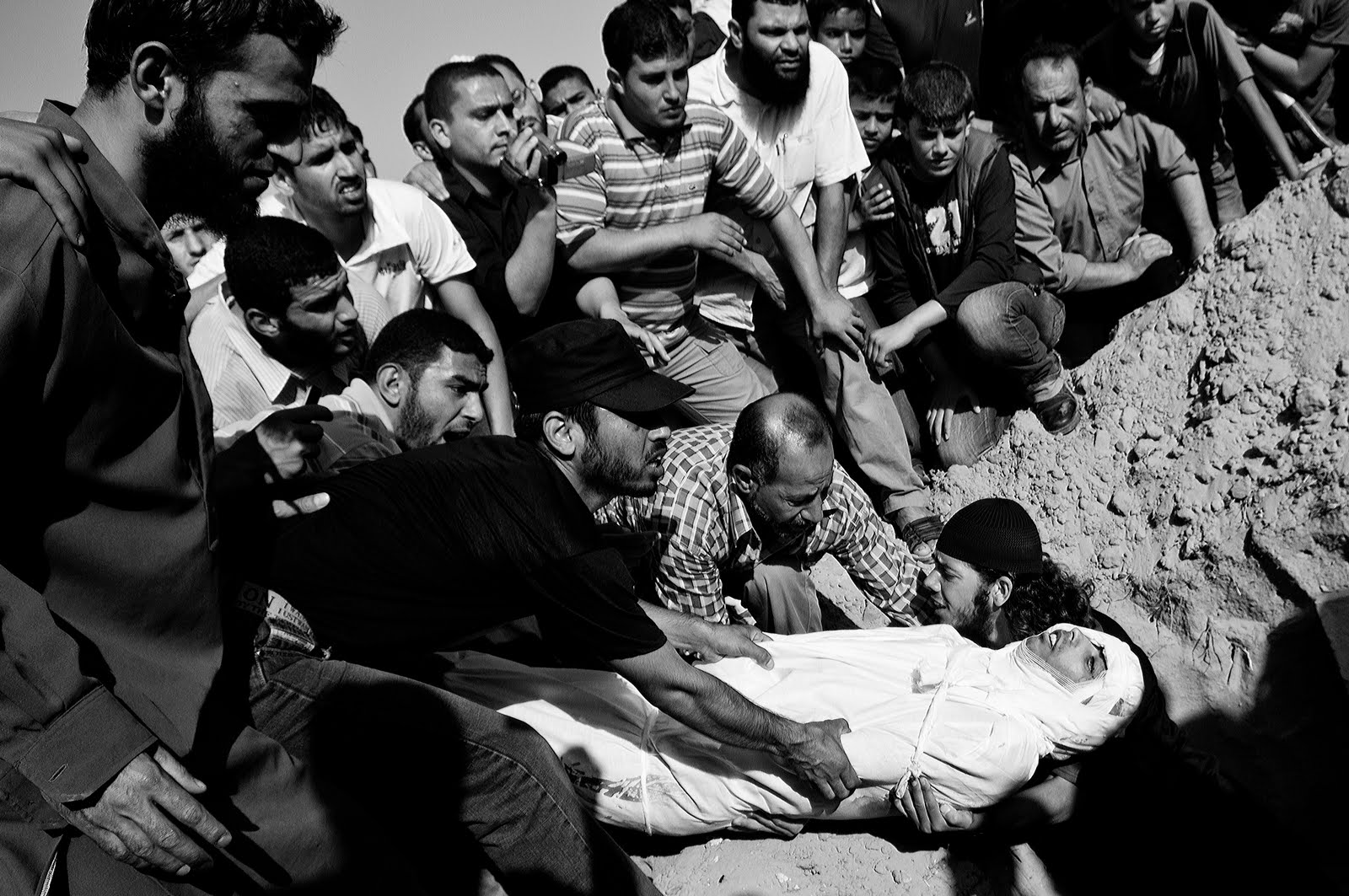
The second feature is the street fighting that took place between riot police and protesters who did not necessarily come from the antiauthoritarian-anarchist milieu –in a lot of cases there was close combat, since the riot police have been ordered by the socialist government to use less tear gas. There was breaking of bank fronts, looting of commercial shops (bookshops, department stores, supermarkets and cafes) and, though not generalized, they certainly gave a quite different tone to what one might expect from the usual GSEE-ADEDY strike demos. One incident in the end of the demo can maybe best convey this change of climate: as the protesters were marching down Panepistimiou St where Kolonaki, a posh district in the heart of Athens, starts, they saw that in Zonar’s, a traditional bourgeois and very expensive café, dressed-up and prim customers were drinking champagne (!) and enjoying their expensive flavoured beverages. The enraged crowd invaded the café, smashed its window panes and soon cakes were distributed among them at a much more affordable price!
These features, in our opinion, show the great impact of December 2008 revolt on the way of protesting. A general approval of violent acts against cops and capitalist institutions like banks and stores was obvious during the demo. Actually, there were a lot of cases where demonstrators attacked the cops to prevent them from arresting “trouble-makers”. Of course, the left-wing calls for “peaceful protest” were not absent, but they seemed meaningless in the eyes of most proletarians.
There was certainly a general feeling of joy in releasing indignation against the cops and thus expressing the anger against this recent onslaught, so in this sense the strike and the demo functioned as a powerful antidepressant, although with a temporary effect.
Last, we should mention a spectacular move by the CP1 (actually by its workers’ front called PAME) on the eve of the strike: they squatted the Stock-Exchange building early in the morning with a surrealist and rather unintelligible banner saying in English “Crisis pay the plutocracy”. Their purpose was, in their words, to “show to the inspectors of the EU Commission, the European Central Bank and the IMF where the money is” –as if they did not know! Actually, the services of the Stock-Exchange were transferred to a different building and the protestors left the blockade at 14:00. On the practices employed by the CP and their influence, however, we will return later in the report.
On the 3rd of March the socialist government announced the new measures for the “salvation of the country” including a 30% cut in the 13th and 14th salaries of public workers, a 12% cut in salary subsidies, increases in petrol, alcohol and tobacco taxes as well as cuts in education and health spending. The first reactions came from the PAME that escalated its spectacular short missions occupying this time the Ministry of Finance and some TV stations in provincial cities the next day. It was again PAME that first called for afternoon demos in Athens and several others cities and towns for the 4th of March. Later, some leftist unionists and leftist organizations, joined by the high school teacher’s union and ADEDY, called for a separate demo in Athens. Given the short notice of the demo and the general feeling of helplessness, about 10,000 people demonstrated in the central streets of Athens in a rather lifeless way which was about to change somehow only the day that followed.
Once again, the initiative for the strike on the 5th of March was taken by the CP which had called for a “general strike” on that day and a demo. ADEDY and GSEE followed with a 3-hour work stoppage, while other unions (both primary and secondary teachers’ unions, public transport unions) called a day strike. The PAME demo gathered around 10,000 people and it ended before the other one had started. Anti-authoritarians and younger people had a more visible presence this time and the atmosphere was tense from the beginning at Syntagma Square near the Parliament where the Socialist Party was going to vote for the new measures.
After a while, the head of GSEE, Panagopoulos, made the mistake to try to speak to the crowd only to have first some yoghurt landed on him, then some water and coffee and finally punches. The astonishing thing was that the attacks came from different directions and soon his thugs were unable to prevent a multiple crowd (where certainly anti-authoritarians and leftists were in the majority) from expressing practically their hatred against him and what he stands for. He was chased and beaten all the way to the entrance of the Parliament and then protected by the riot police. Soon an angry crowd gathered just below the building. The folklore Guards of the Parliament had to leave immediately and some fighting started between the enraged people and the riot squads. It was then that the MPs of SYRIZA coalition chose to make their own spectacular movement, opening a banner in front of the entrance with Breton’s saying “The human being is the answer whatever the question might be” –a sentence which probably made the anti-humanist Althusserian intellectuals belonging to SYRIZA feel uneasy, although it can be read in the proper SYRIZA-like social-democratic way of “People above profits”, this coalition’s favourite motto of the time. When Glezos, an 88-year old SYRIZA member and a symbol of the national resistance to the Nazi occupation tried to prevent the riot police from arresting a young man, he was beaten and sprayed in the face and soon the fighting with the police was generalized. About three hundred or more people were throwing stones at them (mostly anti-authoritarians but not only) and the rest remained there shouting and cursing for some time until the riot police made a heavy attack trying to disperse the crowd. A refreshing incident occurred when some people took the microphones of the union confederation and chanted slogans against wage slavery and the cops that could be heard all over the square in the clouds of tear gas. In the meantime, Tsipras, the leader of SYRIZA, hurried into the Parliament to inform his fellow-MPs, who had just passed the new measures, of the attack against Panagopoulos, condemning it in the most emphatic manner.
The demo then started marching towards the Ministry of Labour, something that was criticized by many demonstrators as an effort on the part of the unionists to release the tension near the Parliament. However, spirits were still running high and so when the demo reached the building of the State Council, some demonstrators attacked the riot squad which was guarding it. Soon a huge crowd started throwing rocks and various objects against them chasing them inside the building. One of them, however, did not make it and was captured and almost lynched by the angered people. The incident, which points both to an acceptance of the escalation of violence even by people who would normally react differently and to the increasing hatred against police especially in those days, lasted some time because support riot squads were hindered from approaching by nearby laid-off workers of Olympic Airways. These workers, soon after the new measures were announced, occupied the State General Accountancy in Panepistimiou St and had been blocking the traffic up till the 12th of March with cars and dustbins. The demo headed down to the Ministry which had already been evacuated when the first demonstrators arrived. Although police presence became heavier, some incidents of smashing occurred (banks, big bookstores and department stores) and the demo ended later at Propylea.
Although the government is trying to put the blame for the mobilizations on the “extremities” of the parties of the Left, it should be pointed out that SYRIZA has a very weak influence on workplaces (except for the secondary teachers’ union), while, on the other hand, the stalinoid CP’s ideology and practice needs some further analysis.
The present conjuncture constitutes an ideal terrain for the activities of the CP since the propaganda of the government itself and of the mass media about the alleged imposition of the tough measures by EU, international markets and speculators seems to confirm its rhetoric about “exiting EU” and “resisting to monopolies and the big capital”, which keeps repeating with religious devotion since the 80’s. As one of the main political representatives of the working class (as a class of the capitalist mode of production and communication) inside the greek state and its institutions, the CP proclaims the establishment of a nationalist “popular” economy where the working class will enjoy the merits of a social-democratic capitalism with a flavor of stalinism. As a matter of fact, the actions of the CP ensure the entrapment of struggles into the limits of capitalist institutions, and what’s more, into the most fetishized of them, elections and the parliament since for the CP, voting for the party and getting organized in it constitutes the culmination of class struggle.
The most prominent characteristic of CP’s activism remains the complete separation of the mobilizations of its union organ (PAME) from the rest of the struggling proletarians. The demonstrations organized by PAME and the CP never come together with the demonstrations called by other workers’ unions and student organizations. Although we are not in the position to know exactly what’s happening inside the apparatuses of both the CP and PAME because of their completely secretive mode of organization, the experience we have from our participation in union assemblies shows that they exercise complete control upon their rank ’n’ file. We are certain that actions are decided by the party leadership without a trace of rank ’n’ file participation in the decisions, that’s why nowadays the ex-members of the CP are more than the active members.
It must be admitted that the level of class activity is low: neither have long-term strikes been organized by many sectors simultaneously nor there are daily militant massive demonstrations. In this context, PAME activities (occupations of public buildings such as the Ministry of Economics and the stock market, massive demonstrations and rallies –practices that have not been unusual for the CP since at least the mid 2000’s) seem impressive, especially when they succeed to call first for a strike or a demo obliging GSEE and ADEDY to follow. It is possible that a plan for splitting GSEE and ADEDY and creating a third “independent” union confederation lies underneath this strategy. Of course, it goes without saying that if the situation gets out of hand by going beyond some 24-hour strikes on a weekly basis, that is to say if long-term strikes break out accompanied by a permanent proletarian presence and militant activity in the streets, the CP will again assume the role of the police by undermining the strikes it does not control, by calling its members off the streets and by trying to repress violently every radical activity. After all, this has been its standard practice since the fall of the dictatorship and they did exactly the same during the December 2008 rebellion.
As for the small, rank ’n’ file unions that have multiplied in the last years, whether leftist or anarchist, they are too impotent to mobilize workers in general apart from their politically affiliated members. Their militant practices (blockades of firms, taking part in demos) rely mostly on the active participation of anti-authoritarians that do not belong to them.
On the 5th of March, GSEE and ADEDY called for another 24 hour strike on Thursday the 11th of March, in response to the climate of a general yet passive discontent with the announced austerity measures, attempting to retain a grain of legitimacy. There are no definite figures available for the levels of participation in the strike, but we can say for sure that it was higher than the previous one (GSEE claims that participation in the strike reached 90%). This was also proved by the number of demonstrators which was almost double than the demo on the 24th of February. According to our estimations, a number of around 100,000 people participated in both demonstrations of PAME and GSEE-ADEDY (PAME organized a separate demonstration following its standard practice), even if the media estimate this number at around 20-25.000. The composition of the crowd was also slightly different since there were more university students, a few high school students and more young workers while immigrants were absent this time. Moreover, a large number of demonstrators coming from almost the entirety of the antiauthoritarian milieu participated in the GSEE-ADEDY demo, dispersing into its whole body.
Another distinctive characteristic of the demonstration was the different, far more offensive tactics of the police. More than five thousands cops tried to prevent an escalation of proletarian violence by closely following the demo from its both sides. Their goal was reached to a certain extent since relatively fewer people not coming from the anarchist-antiauthoritarian milieu supported the street-fighting or actively participated in clashes with the police. This may also be related to the more extended (and thus more conservative) composition of the demonstrators, most of whom have no such previous experiences. Nevertheless, there were many confrontations with the police in various points during the demonstration which continued until its end and extended afterwards around Exarchia where many demonstrators headed following the “tradition” in such occasions.
Furthermore, it must be noted that this time the leadership of the union confederations did not just openly cooperate with the police but they actually gave specific commands to the riot squads to stop the demonstrators on Patision avenue in order to take the lead of the demo and avoid possible conflicts with the rank ‘n’ file and a repetition of the events of last Friday, when they received the (active) booing they deserve. Although the police stopped and attacked the first lines of the demo (which included blocks of some leftist first-degree unions) in order to help the GSEE and ADEDY leadership come to the front, the coordination committee of same first-degree unions and other leftist unionists (such as a group of unionists from OTE, the former public telecommunications company) backed politically this move of GSEE and ADEDY by following their route through a detour from 3rd September avenue, making space for them to lead and then following just behind the GSEE and ADEDY leadership block! Moreover, GSEE and ADEDY did everything in their power to help the cops police the demo. When they reached Syntagma square they tried to send away people arriving next. It is not surprising that the police split the demo at Propylea, where clashes broke out, after the block of the bureaucrats headed back for their headquarters.
We must also note that unionists from the security forces (the police, the fire brigade, etc) who waited on Kolotroni square for the separate demonstration of PAME to pass were applauded by the PAME demonstrators and in their turn applauded them, too. Of course, they quickly disappeared afterwards since it would not be a very pleasant experience for them to “come together” with other demonstrators.
The composition of these last demos is different from the December 2008 demos, as expected. High school students did not show up at all, at least in recognizable blocks, except for a few ones in the last demo, but university students were present in the two last demos as more and more general assemblies are called. In general, apart from the students, the precarious, “lumpen”, marginal segments of the class which was the dominant subject of the riots is understandably not present, since the point at issue, at least for the time being, is the fiscal terrorism imposed through the austerity measures threatening workers with more stable jobs and more to lose. So, what needs some explanation is rather the inertia showed by this part of the proletariat since its mobilizations so far have neither constituted a movement nor have corresponded to the present critical situation. The strikes have been called by the leaderships of either the confederations or the federations of the unions. Even where first-degree unions have called a strike, no mass extraordinary assemblies have preceded, which means that no rank ’n’ file processes have been organized. The destructive and paralyzing influence of the socialist unionists and the control they still have of the unions is still the major obstacle and can be illustrated with the following example. The employees of the National Printing Office occupied it on the 5th of March on the grounds that the new measures provide for an extra 30% cut of the income of the employees of the Ministry of the Interior. The occupation, however, was closed to anyone who “was not employed at the Ministry”, as comrades who tried to visit them were told and were actually sent away. The socialist union cadres who control the union decided to end the occupation in a hurry without even bringing the matter to the assembly with the argument that the government “promised” to omit the particular regulation –a decision that was met by anger but has not been reversed. The occupation of the State General Accountancy by laid-off workers of Olympic Airways had the same sad ending. They are mostly technicians that have not been paid for 3 months now after Olympic Airways had been privatized or laid-off workers that were promised to get transferred to other workplaces. In the first day of the occupation they kept an official as a hostage for several hours and in the same evening they beat and chased a riot squad away. Although they were open to discussions and seemed determined to keep the blockade as long as it needed, since, in their own words, they had “nothing to lose”, they let no one into the occupied building. After a 10-day occupation, their socialist (and right-wing) representatives decided to accept the government’s “promise” to have a special committee formed to look into the matter! In this case, the socialist unionists acted as conveyor belts of the government’s threats against the workers and the Public Prosecutor’s order to have them arrested.
As we had already noted last year in relation to the inability of the December rebellion to extend to the workplaces, the lack of autonomous forms of organization and new contents of struggle beyond the trade unionist demands seem to weigh heavily down on the proletarians in an era of ”public debt” terrorism. What’s more, the limits of that rebellion with its minority character are even more obvious now and soon those who had stayed out of it will probably discover that they will need almost to start a new one to get themselves out of this mess.
Proles and Poor’s Credit Rating Agency
aka TPTG,
March 14, 2010